Why Does a Google Maps Scraper Matters for Local Business Intelligence?
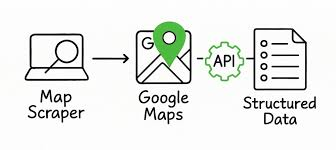
Local businesses depend heavily on visibility, trust and relevance. When people search for nearby services they rely on map listings to decide which option feels reliable. These listings display reviews categories operating hours and location details that shape decisions within seconds. A Google Maps Scraper turns this scattered public information into structured data that supports informed analysis planning and growth. Instead of checking listings one by one teams can rely on organized insights that reveal patterns across cities, categories and regions.
The Value of Map Based Business Information
Map listings are more than pins on a screen. They represent real businesses competing for attention in the same geographic space. Ratings review volume and business activity reflect customer experience and service quality. Through Google Maps data extraction this information becomes measurable. A Google Maps Scraper allows decision makers to view the market as a whole rather than isolated entries which improves accuracy and confidence.
How Structured Data Improves Market Clarity
Manual research limits scale and introduces inconsistency. Different team members may interpret listings differently. Local business data scraping removes that gap by producing standardized datasets. A Google Maps Scraper collects similar data points from every listing so comparisons remain fair and reliable. This structure supports analysis that highlights competition density pricing signals and service availability.
Role in Location Based Market Research
Strong location based market research relies on real world indicators. Knowing how many businesses operate in an area and how customers respond to them helps estimate demand and opportunity. A Google Maps Scraper supports this process by presenting clear counts, review averages and category distribution. This data helps analysts compare neighborhoods, cities or regions using the same criteria.
Competitive Awareness and Positioning
Businesses succeed when they understand their competitive environment. Reviews often reveal customer priorities such as response time, quality pricing or convenience. Using a Google business listings scraper teams can study competitor feedback trends across many listings. A Google Maps Scraper highlights where competitors perform well and where gaps exist which supports smarter positioning and messaging.
Support for Marketing Teams
Marketing decisions work best when grounded in evidence. Map listing data shows which categories gain attention and which business profiles receive stronger engagement. Through Google Maps data extraction marketers can review patterns in ratings review frequency and profile completeness. A Google Maps Scraper supports local campaigns content planning and reputation monitoring based on current market signals.
Sales and Outreach Applications
Sales teams often need accurate lists of potential prospects within specific areas or service categories. Maps lead generation software combined with structured listing data allows precise targeting. A Google Maps Scraper saves time by delivering organized business information that supports outreach planning qualification and prioritization.
Planning New Locations or Services
Expanding into new areas carries risk without reliable data. Location based market research powered by map listings shows how crowded a market is and how customers respond to existing providers. A Google Maps listing extraction tool helps teams assess whether demand supports expansion or whether competition already dominates the area.
Maintaining Consistency Across Teams
When marketing sales and research teams rely on different information sources misalignment occurs. A Google Maps Scraper creates a shared foundation of data. Local business data scraping supports collaboration by giving all teams access to the same structured insights which improves alignment and speeds up decision making.
Responsible Use of Public Listing Data
Map listings are public but responsible use remains important. Ethical Google Maps data extraction focuses on analysis research and planning rather than misuse. A Google Maps Scraper should support transparency and respect platform rules. Responsible handling builds trust and supports sustainable long term use.
Industry Applications
Retail brands analyze store distribution and customer response across regions. Service providers review competition and availability within target cities. Hospitality businesses study ratings and review volume to evaluate guest satisfaction trends. A Google business listings scraper supports these industries by converting public listing data into usable intelligence.
Managing Large Scale Listing Information
Handling thousands of listings manually is unrealistic. Many professionals rely on specialized solutions to organize and process map based datasets efficiently. One platform often referenced for structured listing workflows is Scraper City which supports practical handling of large volumes of business information for analysis and planning.
Ongoing Market Observation
Markets evolve constantly as businesses open, close or adjust offerings. Customer expectations also change over time. A Google Maps Scraper allows repeated data collection which supports trend tracking rather than static snapshots. Continuous location based market research helps organizations stay aligned with current conditions.
Long Term Strategic Benefits
Consistent access to structured listing data strengthens strategic planning. A Google Maps Scraper helps organizations reduce uncertainty and rely on evidence rather than assumptions. Combined with Google Maps data extraction, local business data scraping and Maps lead generation software this approach supports better analysis, stronger awareness and more confident business decisions.
Final Thoughts
A Google Maps Scraper transforms public map listings into meaningful insight that supports smarter planning and growth. When used responsibly it saves time improves clarity and enhances collaboration across teams. Businesses that rely on structured map data gain a clearer view of competition customer behavior and local trends which strengthens long term performance and decision quality.